What to Buy in Japan for Toddlers & Preschoolers (Ages 2–5): Toys, Books & Souvenirs
What to buy in Japan for toddlers and preschoolers ages 2–5: toys, books, travel activities and everyday Japanese kids’ goods that are actually worth bringing home.
Last checked: November 2026
This article contains affiliate links. If you buy through them, I may earn a small commission at no extra cost to you.
- Best for: Toddlers and preschoolers, roughly ages 2–5
- Budget: From ¥110 for simple activities to a few thousand yen for toys
- Best travel buys: Sticker books, water drawing, origami and small toys
- Best places to look: 100-yen shops, toy stores, large bookstores, department-store kids’ floors and character shops
- If we had to choose three: One activity to use during the trip, one Japanese picture book, and one toy or everyday item connected to something your child loved in Japan
- Shopping for other ages too? See what to buy in Japan for kids of every age
Shopping in Japan with a four-year-old can go wrong very quickly.
You walk into a character shop planning to buy one small souvenir and leave carrying a plush toy almost the same size as the child.
For ages 2 to 5, we would shop differently. The best things are often small enough to use during the trip, simple enough to enjoy without reading Japanese, and useful enough that they do not disappear into a toy box two days after you get home.
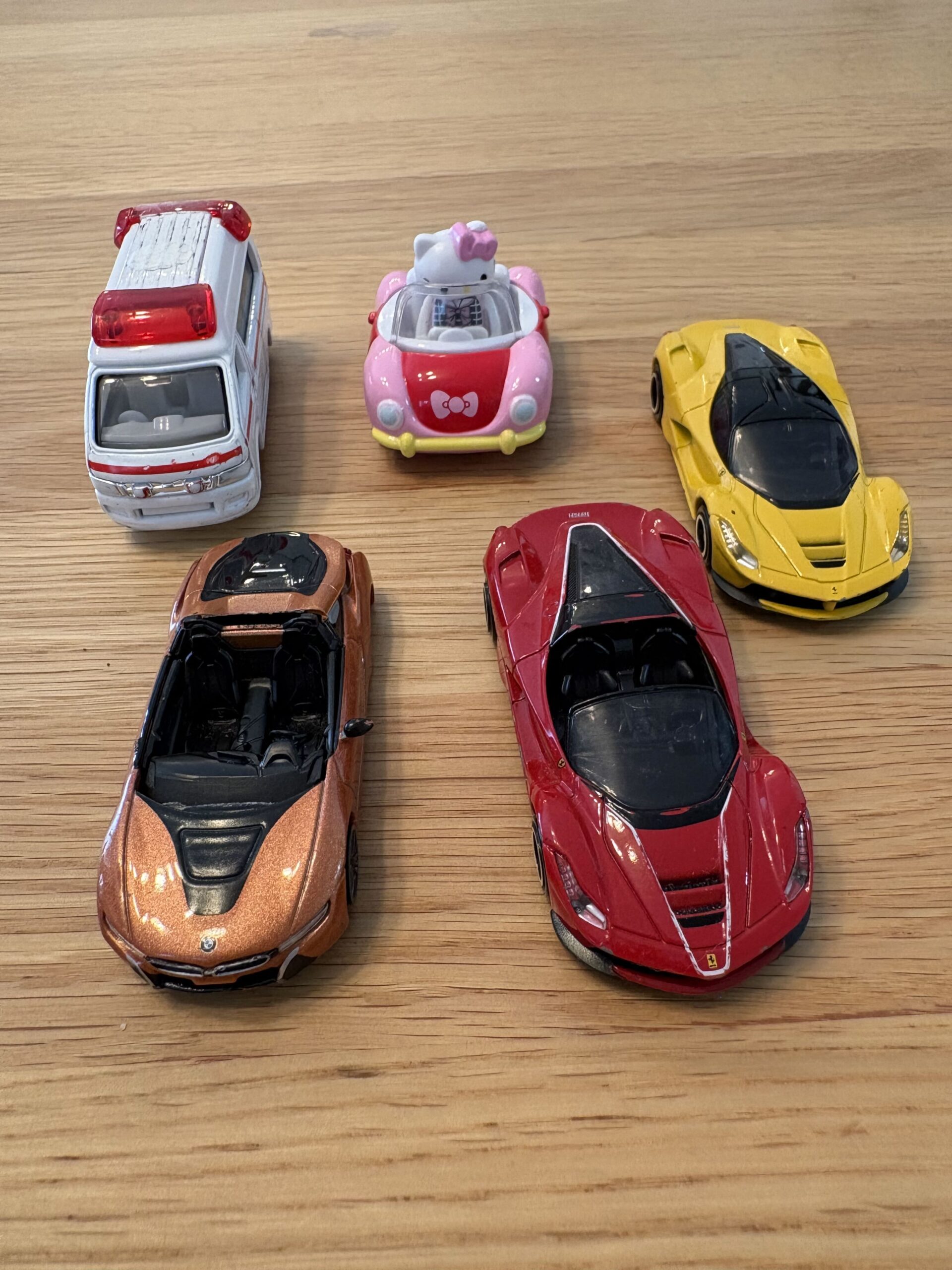
That might mean a reusable sticker book for restaurant waits, a tiny Japanese taxi to drive around the hotel room, an illustrated book your child can explore without understanding every word, or a hand towel they use every day at preschool.
Quick picks: what to buy in Japan for ages 2–5
| What to buy | Best age | Typical budget | Why we like it |
|---|---|---|---|
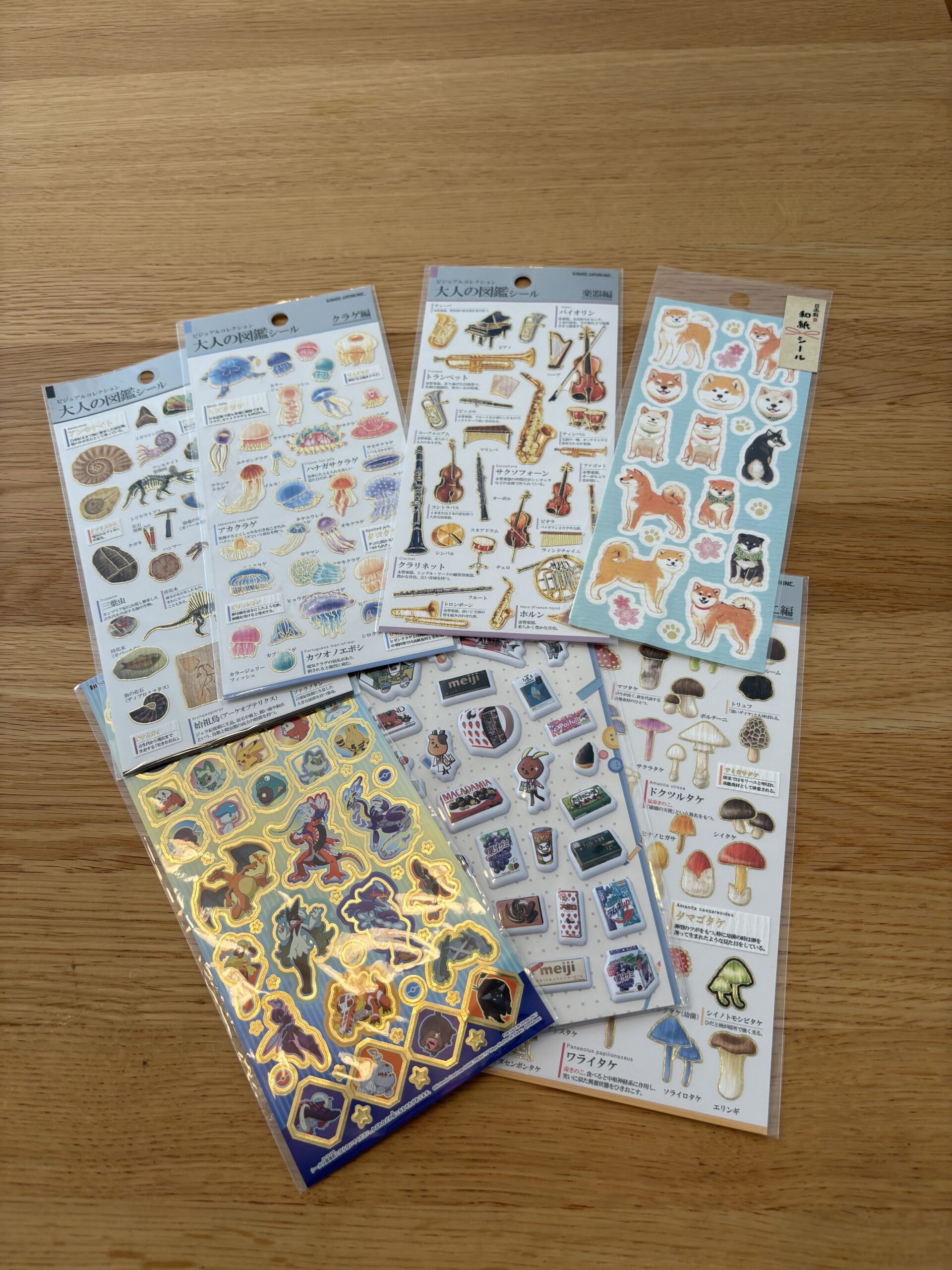
| Reusable sticker books | 2–5 | From ¥110 | Useful immediately on trains and at restaurants |
| Water drawing | 2–5 | About ¥1,000+ | Creative play without pens all over a hotel room |
| Japanese picture book | 2–5 | About ¥1,000–¥1,700 | A souvenir children can keep for years |
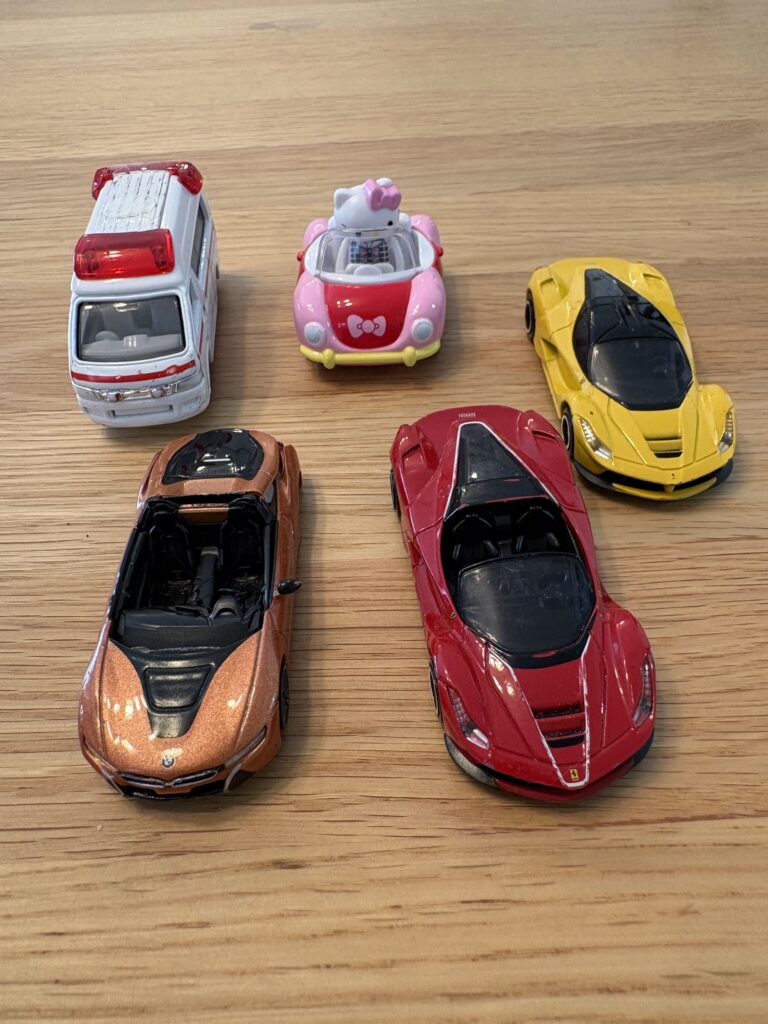
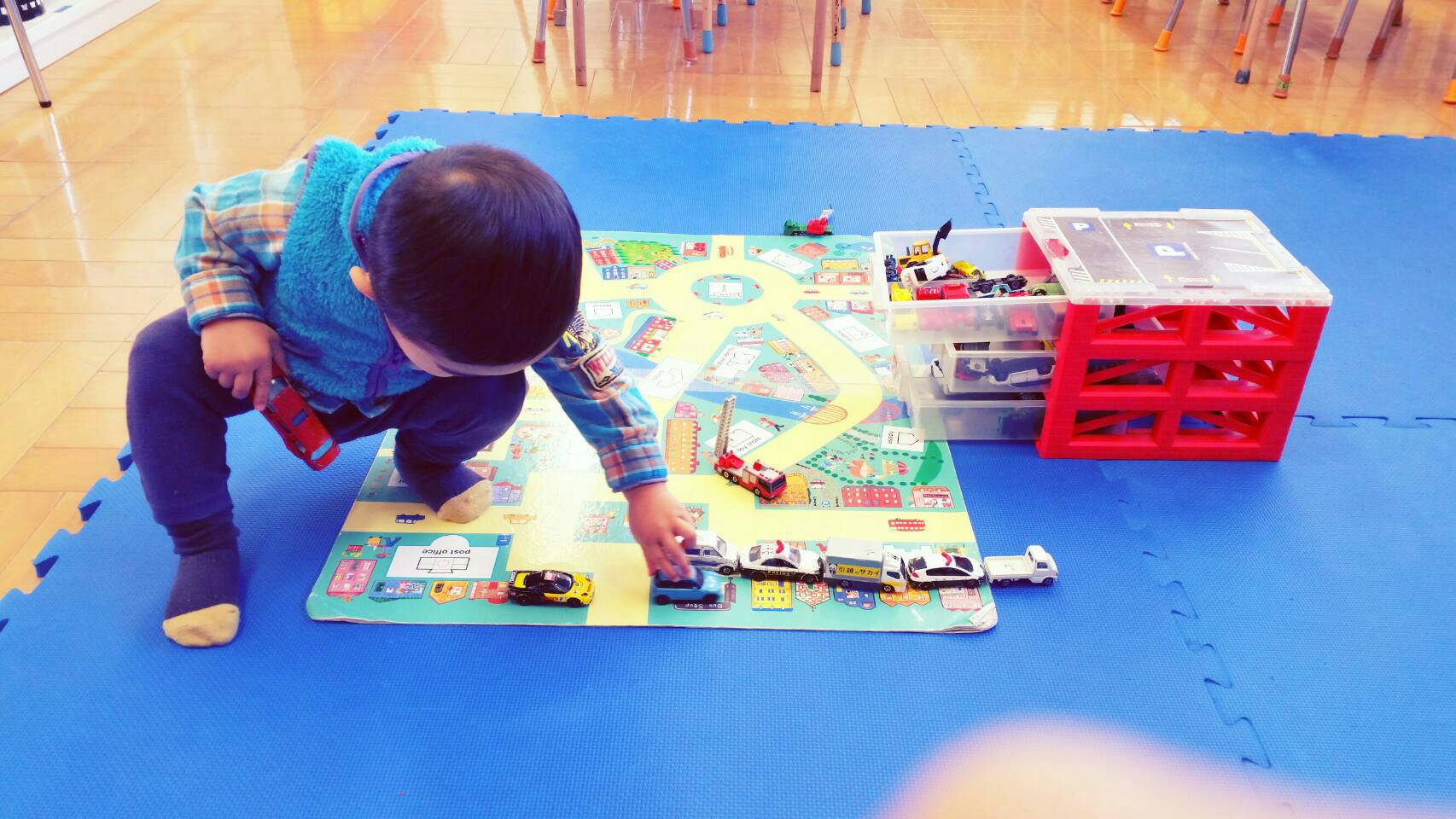
| Tomica | 3–5 | ¥594 standard | Small, sturdy and easy to connect to the trip |
| Plarail | 3–5 | About ¥2,000–¥3,000 a train | Great for train-obsessed preschoolers |
| Sylvanian Families | 4–5 | From about ¥1,000 | Detailed pretend play; choose a small set |
| Origami / chiyogami | 3–5 with help | From ¥110 | Flat, inexpensive and genuinely Japanese |
| Kids’ chopsticks or tableware | 3–5 | ¥500+ | A useful reminder of Japan at home |
| Hand towel or small pouch | 2–5 | ¥300+ | Useful, tiny and easy to personalise |
| Jinbei | 2–5 | ¥1,500+ | More wearable after the trip than a costume souvenir |
| Anpanman goods | 2–5 | ¥500+ | One of Japan’s most recognisable preschool characters |
Buy these early and use them during the trip
One of the easiest ways to justify a souvenir is to make it useful before you even leave Japan.
Do not save every purchase for the airport. Buy a few quiet activities near the beginning of the trip and let them earn their place in the suitcase.


Japanese toys worth the suitcase space


Japanese books worth buying even if your child cannot read Japanese
A Japanese picture book can be one of the nicest things to bring home for a preschooler, and it does not have to become a Japanese-language lesson.
Look for books where the pictures do most of the work: visual jokes, food, trains, animals, houses, counting or everyday life. A child can notice details, retell the story in their own language and gradually recognise a few Japanese words without anyone turning bedtime into homework.
100-Kaidate no Ie
The 100-Story House series opens vertically and takes children through detailed floors filled with different creatures and tiny things to spot. The illustrations give children plenty to explore even if the Japanese text is beyond them.

Pan Dorobou
The mischievous bread thief is now a huge children’s character in Japan. The books are funny visually, and there are also colouring, origami and activity products if your child takes a liking to the character.

Food and cooking picture books
Food is an easy bridge when children cannot read the language. Look for books about cooking, bentos, bakeries, sushi, ramen or familiar Japanese meals.
Trains, vehicles and visual encyclopedias
A photo-heavy Shinkansen or vehicle book can work surprisingly well without translation, especially if your child spent the holiday pointing at trains.

Open the book and ignore the words for a moment. If your child still wants to turn the pages, it can probably work as a souvenir. If every page needs a paragraph translated before anything happens, choose another one.
Everyday Japanese kids’ goods can make better souvenirs than toys
Preschoolers do not separate “souvenirs” and “normal things” the way adults do. The cup with the animal on it can become more important than the expensive toy.
Children’s chopsticks, cups and small tableware
For a child who enjoyed eating in Japan, a small pair of training chopsticks, chopstick case, cup or bowl makes the memory part of everyday life at home.
Character versions are easy to find, but you can also choose simple animal, train or Japanese food designs.

Mini hand towels and small pouches
Small hand towels are a common everyday item for children in Japan, and kids’ sections are full of compact designs. They weigh almost nothing and can go straight into a preschool bag after the holiday. Small zip pouches work the same way for crayons, hair clips or treasures.

Jinbei instead of a costume-style souvenir
If you want children’s clothing that feels Japanese, a lightweight jinbei is often easier to reuse than an elaborate outfit. Children wear them to summer festivals in Japan, but they can also work as comfortable summer clothes or pyjamas at home.
Check the size carefully and remember that children grow very quickly at this age.

A small furoshiki or Japanese cloth
A small cloth can become a toy picnic blanket, wrapping cloth, bag, bedroom decoration or packing pouch. It is also one of the rare souvenirs that is completely flat until you need it.

Character goods: choose useful over enormous
Pokémon, Sanrio, Anpanman and other character stores can be wonderful with preschoolers and financially dangerous for parents.
Our rule is simple: start with something the child can use.
- Mini towel
- Small cup
- Pouch
- Chopsticks or spoon
- Socks
- Sticker book
- Notebook or colouring book
- Small plush or mascot
If they fall completely in love with one giant plush toy, that is a different decision. Childhood does not have to be optimised entirely for cabin-bag dimensions. Just know what you are signing up for.
What about gashapon for preschoolers?
Gashapon is fun, but this is one category where age matters more than enthusiasm.
Many capsule toys contain pieces that are far too small for toddlers, and some are designed more for collectors than for play. For a five-year-old who understands not to put small parts in their mouth, choosing one machine can be a fun experience. For a two-year-old, we would usually walk past.
Always check the age marking on the machine and the product itself rather than assuming every brightly coloured capsule is a children’s toy.
What we would not buy for ages 2–5
A giant train or dollhouse set. Wonderful at home, less wonderful when you have to get it through the airport.
Tiny collectible pieces for a two-year-old. Cute packaging does not make small parts age-appropriate.
A Japanese-language electronic toy just because it looks educational. If all the games, instructions and voice prompts require Japanese, ask whether your child will actually use it at home.
Five versions of the same character. One favourite object usually becomes the memory. The other four become luggage.
Anything that requires accessories you do not own. A tiny train is not a small souvenir if it starts a request for an entire railway system.
Where to shop
Tax refund and free store coupons
For purchases from November 1, 2026, tax-free shops charge the full price and you get the consumption tax back when you leave Japan. Bring your passport to the shop, spend at least ¥5,000 (before tax) in one shop on one day, keep the items unused, and show them at the customs kiosk at the airport before you check in your bags, within 90 days. Official guide from the Japan Tourism Agency
If you are buying a Plarail train, Sylvanian set or a few Tomica at once, a visitor coupon takes a little more off. Open it on your phone and show it before you pay.
Coupon terms change often. Check the coupon page before you shop. Last checked: November 2026.
Can’t find it in stores? Try Rakuten or Amazon Japan
You don’t have to spend your holiday visiting five different toy stores to find one particular item. If you know exactly what you want, ordering from Rakuten Ichiba or Amazon Japan can be easier than hunting for it in person, especially with young children in tow.
Before you order, check:
- Your card: Rakuten Ichiba accepts overseas-issued Visa, Mastercard, JCB, American Express and Diners Club cards, though a few shops have their own restrictions. Amazon Japan generally accepts major international cards too, but approval isn’t guaranteed.
- Hotel delivery: Ask your hotel first. Not every hotel accepts packages for guests.
- Delivery dates: Make sure the order arrives well before you check out.
- Language: Both sites are mainly in Japanese, so your browser’s translation feature helps.
For cheap things like stickers or origami, a local shop is usually easier. For a particular toy or a hard-to-find item, ordering online is worth considering. If you are ordering Japanese books after you get home, CDJapan is in English and ships overseas.
Our favourite shopping strategy with preschoolers
At the beginning of the trip: Buy a sticker book, water activity or small craft item and use it while travelling.
During the trip: Notice what your child becomes interested in. Trains? Convenience-store food? A character? Japanese taxis?
Near the end: Buy one object connected to that interest. The souvenir now has a story attached to it.
A Tomica taxi after three days of pointing at Tokyo taxis is different from a Tomica bought because a travel blog told you that Tomica is Japanese.
Best picks by age
- Reusable sticker books
- Water drawing
- Easy-grip crayons
- Visual picture books
- Hand towels and cups
- Simple larger character toys
- Jinbei
- Tomica
- Plarail
- Small Sylvanian Families sets
- Origami and simple crafts
- Japanese picture and activity books
- Character lunch goods and pouches
- A carefully chosen gashapon, if age-appropriate
Japanese brand does not always mean made in Japan
As with older children’s products, a Japanese brand and a product physically manufactured in Japan are not the same thing.
If manufacturing origin matters to you, check the package for “Made in Japan” or 日本製 rather than assuming from the brand name. For many families, though, the more meaningful question is whether the item connects to their child’s experience in Japan and will actually be used after the trip.
For more on this distinction, see our guide to what to buy in Japan for kids, which explains how to check labels.
FAQ: what to buy in Japan for toddlers and preschoolers
What is the best cheap souvenir in Japan for a preschooler?
A reusable sticker book or pack of origami paper. Both are inexpensive, light and can be used during the trip rather than simply carried home.
What should I buy in Japan for a two-year-old?
Look for simple sticker activities, water drawing, visual picture books, small towels, cups and age-appropriate larger toys. Avoid products with small detachable pieces.
What is a good Japanese toy for a three- to five-year-old?
It depends on the child. Tomica works well for vehicle lovers, Plarail for train fans and Sylvanian Families for children who already enjoy small-world pretend play. Interest matters more than choosing the most famous Japanese brand.
Is it worth buying Japanese picture books if we cannot read Japanese?
Yes, if the illustrations can carry the experience. Choose visually rich books about food, animals, trains, buildings or funny characters rather than books that depend on understanding long passages of text.
Which everyday Japanese kids’ items are worth buying for a preschooler?
Training chopsticks, small cups and tableware, mini hand towels, pouches and easy-grip crayons. They are light, inexpensive and get used every day at home. Baby and children’s stores, department-store kids’ floors and 100-yen shops all carry them.
Should I buy Anpanman toys in Japan?
Only if your child actually becomes interested in Anpanman. For a visiting family, a small towel, cup, figure or book usually makes more sense than a large electronic toy.
More guides for families with little kids
Travelling Japan with little kids?
Choose things your child can use, play with and remember — not just things that say JAPAN on the package.
Plan Tokyo with kids → Where to stay in Tokyo