Japan with School-Age Kids: A Practical Guide for Ages 6–12
Japan gets much easier once your children reach school age — but not because they can suddenly walk all day. The real difference is that they can participate: navigate trains, order food, make something with their hands, understand a little history and have strong opinions about what they want to see.

This article contains affiliate links. If you book through them, I may earn a small commission at no extra cost to you.
For many families, ages 6–12 are a sweet spot for Japan.
You no longer need to build the entire trip around naps, playgrounds and diaper changes, but you also should not plan the holiday as if you were travelling with four adults.
A good Japan trip with school-age kids mixes three things: places the adults genuinely want to see, experiences the children can actively participate in, and enough empty space for everyone to recover.
- Ages 6–8: prioritise hands-on activities, trains, science, animals and short cultural stops.
- Ages 9–10: this is a great age for teamLab, crafts, aviation, museums, Nara, Kyoto and longer experiences.
- Ages 11–12: give them more control — anime, gaming, shopping streets, food and navigating Tokyo can become the attraction.
- Best planning rule: one booked anchor activity plus one flexible activity nearby.
- Do not race across Japan: fewer bases usually work better than changing hotels every night or two.
- Transport: on JR, children ages 6–11 use child fares; age 12 and over pays the adult fare.
Why school age is such a good time to visit Japan
Japan is unusual in how many ordinary parts of a trip can become interesting to a school-age child.
The Shinkansen is transportation, but it is also a 300 km/h train ride. A convenience store is somewhere to buy breakfast, but it is also a wall of unfamiliar snacks. A department-store basement is lunch and a food tour at the same time. Even using a transit card and finding the correct platform can feel like a small independent mission.
Children at this age are also old enough to get something from places that are not specifically designed for children. A market, shrine, castle, neighbourhood or craft workshop can work surprisingly well when the visit has a purpose.
You do not need to ask, “What can kids do in Japan?” all day. A better question is, “What part of this experience can my child own?”
What works at different school ages
Keep it tangible
Younger school-age children still do best when there is something to touch, make, ride, feed, collect or solve.
- Science and railway museums
- KidZania
- Short craft workshops
- Tokyo Skytree or observation decks
- Nara deer
- Boat and train rides
- Short temple or shrine visits rather than a full day of them
Add complexity
This is one of the easiest ages for Japan. Children can handle longer structured experiences and understand why something is interesting.
- teamLab
- ANA Blue Base
- Edo kiriko glass cutting
- Samurai or ninja experiences
- Longer museums
- Food-making workshops
- Kyoto temples with a story or mission
Let them influence the itinerary
Older school-age children often care less about “children’s attractions” and more about their own interests.
- Akihabara
- Shibuya and Harajuku
- Anime and gaming stores
- Food markets
- Harry Potter Studio Tour
- History with context
- Helping navigate trains and choose restaurants
Give them one part of the trip to own
This is one of the biggest differences between travelling with a preschooler and travelling with an 8-, 10- or 12-year-old.
School-age children can participate in planning.
Let them choose one attraction, navigate one train journey, find the correct platform number, choose a snack at a convenience store or decide which restaurant to try.
Pokémon, trains, food, castles, fashion, baseball, animals or anime — let one real interest shape part of the trip.
Ask an older child to identify the train line, station number or next stop rather than doing every piece of navigation yourself.
Stations, museums and attractions often have commemorative stamps. A simple notebook can turn sightseeing into a collection.
Experiences that work particularly well at school age
1. Trains and aviation
Even children who are not obsessed with trains often find Japanese transport more interesting than the transport at home.
Historic trains, Shinkansen, railway science and hands-on exhibits. It is an easy full or half-day trip from Tokyo for a train-interested child.
An especially useful Kyoto reset day when the family needs something other than temples. Elementary and junior-high students currently pay ¥500 admission.
School-age visitors can see the airline’s real training environment. The standard tour is for elementary-school age and older and requires advance booking.
2. Science, art and things that move
Dinosaurs, Japanese nature, technology and large-scale science exhibits in Ueno. Permanent exhibitions are currently ¥630 for adults and free for high-school-age visitors and younger.
A physical digital-art experience rather than a museum where children must quietly look at walls. Visitors move through water, light and large immersive spaces.
Better for children who already know and like Harry Potter. Treat it as the main event of the day rather than trying to pair it with another major attraction across Tokyo.
3. Real cultural experiences
School-age children are often more interested in Japanese culture when they are doing something rather than being told to admire it.
Cutting or decorating an object gives children something concrete to bring home and gives traditional craft a purpose beyond looking at it.
Food workshops usually work better than a long explanation of food history — especially when children can eat what they made afterwards.
Find family-friendly sushi classes on byFood →Kyoto becomes more engaging when historical Japan is attached to costumes, film sets, weapons demonstrations or a hands-on activity.
4. City neighbourhoods instead of another attraction
You do not need to buy a ticket every day.
Older school-age children can genuinely enjoy walking through a neighbourhood, looking at shops, choosing food and watching how Tokyo works.
Better from roughly age 9 or 10 if the child actually likes games, manga or anime. Give them time to browse rather than turning it into a 30-minute photo stop.
Crossings, fashion, character shops, arcades and food can be more exciting to an 11-year-old than another formal attraction.
Ginza can work surprisingly well: Japanese stationery, shop windows, Hakuhinkan Toy Park and the weekend pedestrian zone make it possible to enjoy the area without buying luxury goods.
Ginza’s Chuo-dori becomes a pedestrian zone on Saturdays, Sundays and national holidays from noon. It currently runs until 6:00 PM from April through September and 5:00 PM from October through March, weather permitting.
A particularly good Tokyo option: KidZania
KidZania Tokyo makes more sense at school age than it does with a very young child because children participate independently in structured jobs.
Activities include jobs such as pilot, firefighter, police officer, dentist, train driver, baker and product developer.
For international families, Wednesday is particularly useful: KidZania’s current English Wednesday program runs around half of its activities in English from start to finish.
KidZania is not a quick stop. Let it be the main activity, then have dinner or take a waterfront walk in Toyosu rather than crossing Tokyo for another reservation.
Where to go in Japan with school-age kids
Best for variety
Tokyo is where almost any specific interest can become a day.
- KidZania
- National Museum of Nature and Science
- teamLab
- Akihabara
- Shibuya and Harajuku
- Skytree
- Harry Potter Studio Tour
- ANA Blue Base
- Craft workshops
Best when history is made active
Kyoto does not need to become a marathon of temples.
- Fushimi Inari — climb only as far as interest lasts
- Kyoto Railway Museum
- Nishiki Market
- Tea or wagashi experience
- Samurai or ninja activity
- Arashiyama as its own half or full day
Best for food and high-energy days
Osaka works well after Kyoto because it changes the pace completely.
- Universal Studios Japan
- Osaka Aquarium Kaiyukan
- Dotonbori
- Arcades
- CUPNOODLES Museum Osaka Ikeda
One of the easiest cultural day trips
Nara combines something immediately exciting — free-roaming deer — with temples and history that adults want to see.
Remember that the deer are wild animals. Children should not approach them alone, tease them with crackers or carry exposed food and plastic bags around them.
Better for older or thoughtful school-age children
Hiroshima can be a meaningful part of a family trip once children are old enough for difficult history.
Do not rush the Peace Memorial Museum between two fun attractions. Prepare children for what they will see and give the day enough emotional space.
Excellent — if you actually have time
Volcanoes, onsen, trains, nature and road trips can be fantastic at this age.
The problem is distance. Do not add Kyushu simply because it fits on a map. Give it several nights or save it for another trip.
Arashiyama and Fushimi Inari look easy to place on the same sightseeing list, but they sit on opposite sides of Kyoto and both involve substantial walking. With children, giving each side of the city enough time usually works better.
Yes, even Ginza can work with a school-age child
This is a good example of how travel changes at this age.
Ginza is normally described as a luxury-shopping district, which makes it sound like somewhere families should skip. But a school-age child can enjoy it as a city walk.
Look at seasonal Japanese paper and stationery, compare elaborate shop windows, visit a bookstore, walk down Chuo-dori when it becomes traffic-free and finish at Hakuhinkan Toy Park.
Hakuhinkan currently fills four floors with roughly 200,000 toys and also has a large slot-car racing circuit on the fourth floor.
This kind of afternoon is useful because nothing requires the family to perform. There is no timed entry, six-hour commitment or pressure to “get value” from an expensive ticket.
Food gets much easier at this age
You do not need to spend every meal searching for a restaurant labelled “kid-friendly.”
School-age children can often find something they will eat in ordinary Japanese restaurants, food halls and markets — and trying unfamiliar food can become part of the trip.
Children control what arrives and how much they eat. The ordering screens also make the experience part restaurant, part game.
Useful when everyone wants something different. Buy several items and turn lunch into a tasting session.
Nishiki, local shotengai and food streets work well when children can choose one snack instead of being dragged through every stall.
Fast, casual and easy to understand. Ticket machines can become part of the experience for older children.
Let each child choose a breakfast or snack budget and make their own selections.
CUPNOODLES, wagashi, sushi or other hands-on food activities are often more memorable than another sightseeing stop.
In Tokyo, browse food-making classes on byFood — mochi, wagashi and udon classes are often easier for younger children than a full sushi course.
The CUPNOODLES Museum Osaka Ikeda currently has free general admission. The My CUPNOODLES Factory costs ¥500 per cup, while the Chicken Ramen Factory has a separate fee and reservation system.
Getting around Japan with school-age kids
Japan’s transport is easy to use, but a trip can still become tiring because stations are large and a “simple” travel day can contain multiple trains, platforms and long walks.
| Issue | What to know | What works with school-age kids |
|---|---|---|
| Rail fares | JR child fares apply from ages 6–11. Ages 12+ pay adult fares. | Do not assume a 12-year-old still qualifies for a child ticket. |
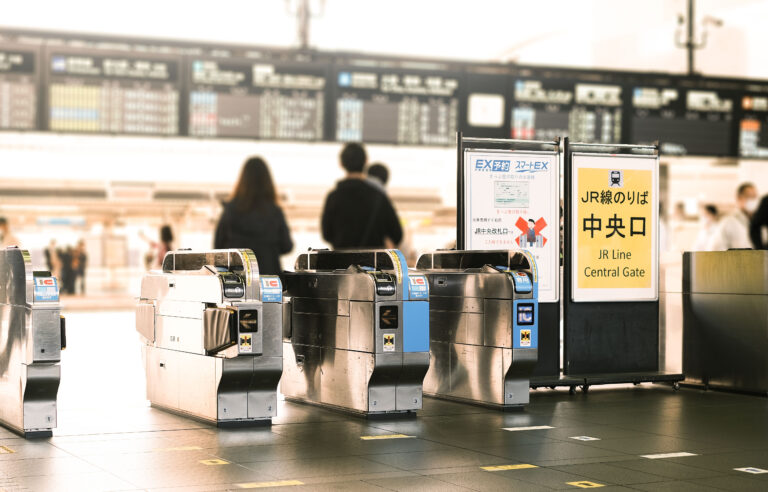
| IC cards | Useful for local trains, subways and many buses. | Older children can tap their own card and help follow station numbers. |
| Shinkansen | Part transport, part experience. | Buy a station bento, watch the speed and look for Mt. Fuji on suitable routes. |
| Luggage | Large bags make station transfers much harder. | Use luggage forwarding between major hotel changes and carry one overnight bag. |
| Hotel changes | Every move costs packing and transit time. | Use a few bases and make day trips rather than sleeping somewhere new every night. |
Yamato’s regular TA-Q-BIN service generally delivers luggage the next day or within two days depending on route, while same-day services exist on limited airport, station and hotel routes. Ask your hotel about timing before sending anything you need the next morning.
The most important rule: do less than the map suggests
Japan’s rail network makes an ambitious itinerary look deceptively possible.
Tokyo, Hakone, Kyoto, Osaka, Hiroshima, Shikoku and Kyushu can all appear connected by neat lines. That does not mean you should try to visit all of them in two or three weeks.
A school-age child may cope perfectly well with the individual trains. What wears families down is repeating the cycle: check out, carry bags, find the platform, travel, find the new hotel, check in, then start sightseeing.
teamLab Planets and the Harry Potter Studio Tour are both excellent. They are also on very different sides of Tokyo and both deserve time. Putting them together simply because the booking system allows it creates an unnecessarily tiring day.
A realistic daily rhythm
Museum, KidZania, teamLab, major temple area, workshop, Disney or another activity that would be disappointing to miss.
Market, shopping street, park, arcade, observation deck or neighbourhood wandering rather than a 50-minute cross-city transfer.
Dinner near the hotel, convenience-store dessert, hotel bath and an early night can protect the next day’s plans.
A realistic first Japan itinerary with school-age kids
For a first trip of around ten days, you do not need to see the entire country.
With 12–14 days, add one meaningful extension — for example Hiroshima/Miyajima, Hakone/Fuji or a few nights in Kyushu. Adding all three usually creates more transit than holiday.
Book these before you arrive
- Ghibli Museum: advance reservation is essential. Do not use it as a spontaneous rainy-day backup.
- Warner Bros. Studio Tour Tokyo: use a timed reservation and treat it as a major part of the day.
- teamLab: buy a dated/timed ticket rather than assuming you can walk in.
- KidZania: reserve your preferred session. Wednesday is currently the strongest day for English-language participation.
- ANA Blue Base: advance reservations are required and participants need to follow the tour’s identification and arrival requirements.
- Popular workshops: book ahead if a specific craft, cooking or samurai experience is important to the child. Small home cooking classes in Tokyo often have only a few spots per day — check availability on byFood.
What I would not do
School-age children can enjoy adult sightseeing, but they still need genuine ownership of the trip.
The individual journeys may look short. Packing, checking out and finding a new hotel is what consumes the day.
Tokyo is enormous. Group activities geographically instead of treating travel time as empty space.
Choose fewer places and give each one a reason: a hike, garden, story, stamp, view or food stop.
A 6-year-old without a stroller can still be completely finished by late afternoon.
Trains, neighbourhoods, food halls, parks, shopping streets and pedestrian zones can be as memorable as ticketed attractions.
Summer changes the equation
The limiting factor in July and August is often heat rather than age.
A child who happily walks around Tokyo in April may struggle with a similar itinerary in midsummer. Move the outdoor sightseeing to the morning, use museums and malls during the hottest part of the day, and do not measure success by how many locations you complete.
School-age children are also old enough to tell you when they are tired — which only helps if the schedule is flexible enough to listen.
Where you can save money
School-age travel in Japan does not have to mean paying for a child attraction every day.
Some have very low or free admission for children. The National Museum of Nature and Science currently admits high-school-age visitors and younger free to its permanent exhibitions.
Asakusa, Ginza, Shibuya and neighbourhood shopping streets can fill several hours without an entrance ticket.
A front-window local train, Yurikamome ride or Shinkansen journey can be part of the day’s fun rather than dead travel time.
Japan with school-age kids FAQ
There is no single best age, but ages roughly 7–11 are particularly flexible: children can usually manage public transport, participate in longer experiences and understand cultural attractions without needing the trip structured around naps.
Usually not. But younger school-age children can still tire quickly, especially in summer or on sightseeing days involving large stations, temples and hills. Plan fewer stops rather than assuming the absence of a stroller means adult-level stamina.
On JR, ages 6–11 use the child fare and ages 12 and over pay the adult fare. Other operators generally use similar categories, but check the specific ticket or pass you are buying.
One major booked experience plus one nearby flexible activity is a very safe default. Some families can do more, but repeatedly crossing a large city to make multiple timed reservations is where otherwise enjoyable trips become exhausting.
It can be if the itinerary is simply temple after temple. Mix historical sightseeing with food, railway experiences, crafts, markets, a short hike or a samurai/ninja activity and Kyoto becomes much easier.
Yes. The combination of deer, a walkable historic area and major temples works well across much of the school-age range. The deer are wild, however, so children should stay close to adults and follow the local feeding guidance.
This depends more on the individual child than the number on their birthday. For older or thoughtful school-age children it can be deeply meaningful, but the Peace Memorial Museum contains difficult material and should not be treated like another attraction to rush through.
For around ten days, Tokyo plus Kyoto and Osaka or Nara is already a substantial trip. With two weeks, add one additional region rather than trying to cover every famous stop between Hokkaido and Kyushu.
The advantage of this age is not stamina — it is curiosity
The temptation with school-age children is to assume that once the stroller disappears, you can finally travel exactly as adults would.
That misses what makes this age so good.
A school-age child can notice how a Shinkansen works, choose a strange snack, compare a shrine with something they learned at school, try cutting glass, ask why Hiroshima matters, spend an hour looking for a favourite character and work out which train goes back to the hotel.
That participation is what makes Japan particularly rewarding at this age.
Give children something real to do, give them some control, and leave enough room in the schedule for the trip to become theirs as well as yours.
More Japan family guides
Plan the trip by destination, weather or the age of your youngest child.
Plan around your child’s interests, not a checklist.
Japan has enough to fill ten family trips. Pick fewer bases, let each child choose something that matters to them and leave enough time for the unexpected parts to become the memories.
Start with Tokyo →