
20 Things to Do in Tokyo with Teens: Japanese Experiences They’ll Actually Love
Sumo, kendo, manga, Edo Kiriko glass and Akihabara — 20 things to do in Tokyo with teenagers aged 13 to 17, with age rules, teen prices and booking links for each.
This article contains affiliate links. If you book through them, Japan Kids Travel may earn a small commission at no extra cost to you. Prices and age rules change, so always check the booking page before you go.
- Best age: 13–17 (each operator’s own age rule is listed below)
- For anime and manga fans: Manga lesson, anime workshop, Anime Tokyo Station, Akihabara
- For active teens: Sumo show, kendo, ninja and samurai lessons, taiko
- Take it home the same day: Edo Kiriko glass, kintsugi, custom perfume, a manga page
- Free options: Anime Tokyo Station, Akihabara, Harajuku and Shimokitazawa
- Teen prices: Joypolis counts 7–17 as children; SHIBUYA SKY charges adult prices from 13
- Booking: Most workshops need advance booking; book 1–2 weeks ahead in school holidays
- Last updated: November 2026
Teenagers are the hardest travelers to impress — and the easiest to lose to a phone screen. The fix is giving them something they actually chose. Looking for things to do in Tokyo with teens? This guide focuses on experiences that are hard to get anywhere but Japan: stepping into a sumo ring, cutting Edo Kiriko glass, learning kendo or drawing manga with a professional — plus the anime, gaming and street-fashion side of the city.
For each experience, you’ll find what your teen actually does, the operator’s age rule, how long it takes and where to book. When more than one company runs a similar experience, both are shown so you can compare. Travelling with younger kids too? See our guide to unique Japanese experiences in Tokyo with kids (ages 3–12), or start with the Tokyo with kids guide for the basics.
Quick comparison: 20 things to do in Tokyo with teens
“Best for” is our suggestion. “Age rule” is what the operator or booking page states — that one decides whether your teen can join or what they pay. “None listed” means the booking page gives no age rule, so ask before you book. Prices are in yen where the operator lists yen; Viator shows US dollars.
| Experience | Area | Best for | Age rule | Time | Price | Booking |
|---|---|---|---|---|---|---|
| 1. Manga drawing lesson | Ikebukuro | Anime and drawing fans | Klook: 6+ | About 2 hr | From ¥19,800 | Klook, Viator |
| 2. Anime creation workshop | Ikebukuro | Serious anime fans | None listed | About 2 hr | ¥37,500 | Klook |
| 3. Edo Kiriko glass cutting | Asakusa | Craft lovers | 9+ | See listing | From about ¥4,500 | Klook |
| 4. Kintsugi | Shibuya / Asakusa | Calm, creative teens | None listed | 45 min–1 hr 50 min | From ¥8,596 (Klook) | Klook, Viator |
| 5. Pottery (wheel or hand-building) | Asakusabashi | Craft lovers | None listed | About 1.5 hr | ¥8,125 + shipping | Klook |
| 6. Custom perfume | Asakusa | Fashion and beauty fans | None listed | 90 min | ¥11,000 | Klook |
| 7. Ramen and gyoza class | Nerima (Ekoda) | Food lovers | byFood: 13+ | About 2.5 hr | From ¥11,000 (byFood) | byFood, Viator, Klook |
| 8. Tsukiji tour + sushi making | Tsukiji | Food lovers | None listed | About 4 hr | From ~US$120 (Viator) | Viator, byFood |
| 9. Ninja and samurai lesson | Shiomi / Kagurazaka | Active teens | None listed | 1–2 hr | From ¥9,800 (Kagurazaka) | Viator |
| 10. Kendo | Nihonbashi / Ueno area | Sporty teens | None listed | About 2 hr | From ¥18,000 (Klook, min. 2) | Viator, Klook |
| 11. Sumo show with chanko lunch | Asakusa | Everyone | 12+ pay adult price | About 2 hr | ¥16,000 | Klook |
| 12. Taiko drumming | Shibuya / Okubo | Siblings, whole family | None listed | 1–1.5 hr | From ¥2,990 (Okubo) | Klook |
| 13. Kimono walk in Asakusa | Asakusa | Photo lovers | None listed | Half day or more | From ¥2,880 | Klook |
| 14. Harajuku and purikura | Harajuku | Fashion and photo lovers | All ages | 1–3 hr | Free; tour extra | Viator (tour) |
| 15. Shimokitazawa vintage | Shimokitazawa | Fashion lovers | All ages | 2–3 hr | Free to browse | Not needed |
| 16. Akihabara anime and gaming | Akihabara | Anime and game fans | All ages (self-guided) | 2–4 hr | Free; tour extra | Viator (tour) |
| 17. Anime Tokyo Station | Ikebukuro | Anime fans | All ages | About 1 hr | Free | Not needed |
| 18. Tokyo Joypolis | Odaiba | Thrill seekers, rainy days | 7–17 child price | Half day | Passport ¥5,000 (ages 7–17) | Klook, official site |
| 19. teamLab Planets | Toyosu | Photo lovers | Student price 13–17 | 1.5–2 hr | ¥2,800 (junior high/high school) | Klook, official site |
| 20. SHIBUYA SKY | Shibuya | Photo lovers | Adult price from 13 | About 1 hr | Web from ¥2,700 | Klook, official site |
Japanese Craft & Creative Workshops for Teens
The picks for teens who like making things. Most end with something they made themselves, and three of them — Edo Kiriko, pottery and perfume — sit in or near Asakusa.
1. Draw manga with a professional artist

Taught by working Japanese manga artists, this 2-hour class covers how manga is actually made — character design, panel layout and inking with real G-pens, screen tones and manga paper. Teens draw their own character and leave with the finished page.
The same studio appears in our kids’ guide, but the pace and the tools suit teenagers who already sketch at home. Manga Dojo sells its classes on both Klook and Viator, so compare the price and course level on each.
Photo is from the Klook listing. Both options meet at Manga Dojo Tokyo, next to the Animate flagship store.
2. Create a short anime with a professional animator
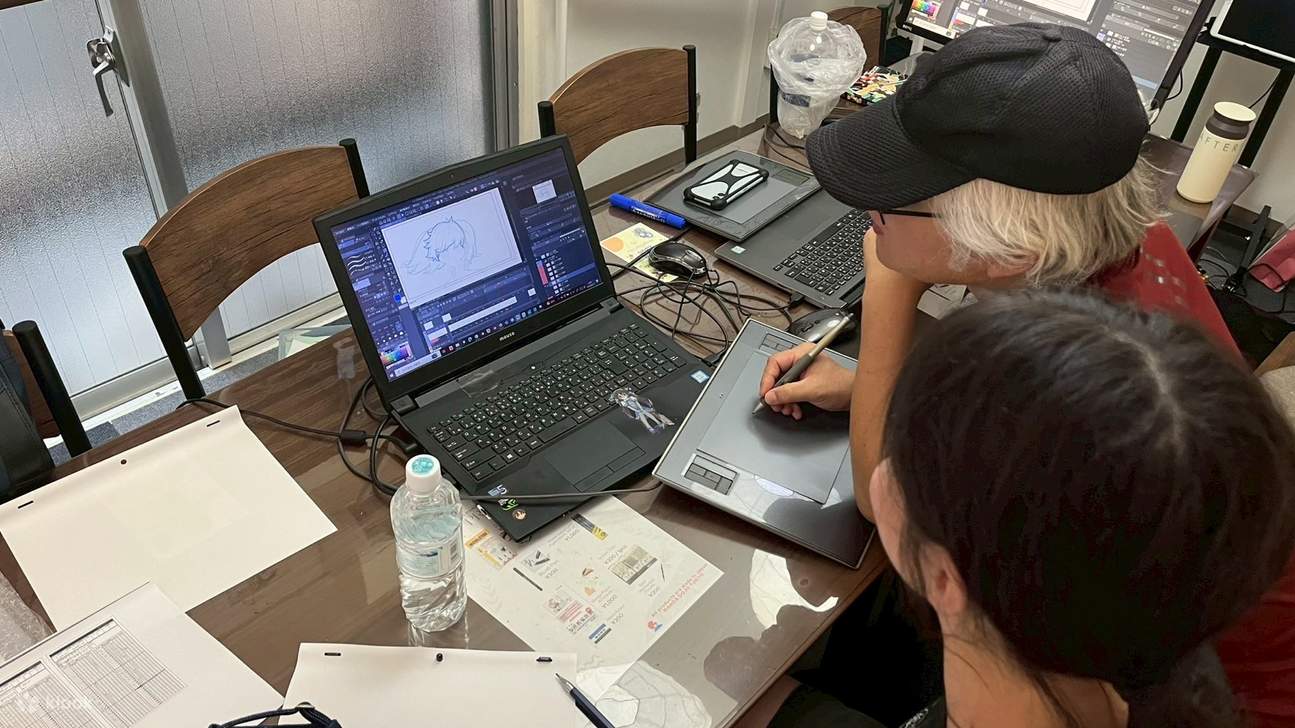
Where the manga class is about a single page, this one is about movement. A professional animator explains how key frames and in-between drawings become motion, then teens draw a short animated character on a pen tablet using CLIP STUDIO PAINT — the software many Japanese studios use — and take the data file home.
At ¥37,500 per person it’s the most expensive experience on this list, so it makes most sense as the one big booking for a teen who is seriously into anime or wants to work in it one day.
3. Cut your own Edo Kiriko glass

Edo Kiriko is Tokyo’s traditional cut glass — sharp geometric patterns ground into glass on a spinning wheel. After a short demonstration, teens mark a design and cut it themselves with a craftsperson nearby. The finished glass is boxed on the spot, so it goes home the same day.
It needs a steady hand and patience, which is why it lands so well with teenagers: the result looks genuinely professional. Ages 9 and up can join; if a parent wants to join with a younger child, contact the studio first.
4. Try kintsugi, the art of golden repair
Kintsugi repairs broken pottery with gold-colored seams, turning the cracks into the feature. It’s a quiet, focused activity with an idea behind it that tends to stick with teens long after the trip.
Traditional urushi lacquer takes weeks to cure, so short beginner workshops are designed so you leave with a finished piece. The two options below are very different in length and price.
5. Throw your own pottery on a wheel
Teens choose between the electric wheel and hand-building, then make one piece — a bowl, a cup or a mug — from 700 g of clay. The studio glazes and fires it afterwards. Classes are tiny (1–4 people) and all staff speak English, Japanese and Chinese.
The wheel is the draw for teenagers: it’s harder than it looks and very satisfying when it works. For younger siblings, our kids’ guide has a hand-building class that takes children from age 3.
6. Blend your own perfume in Asakusa
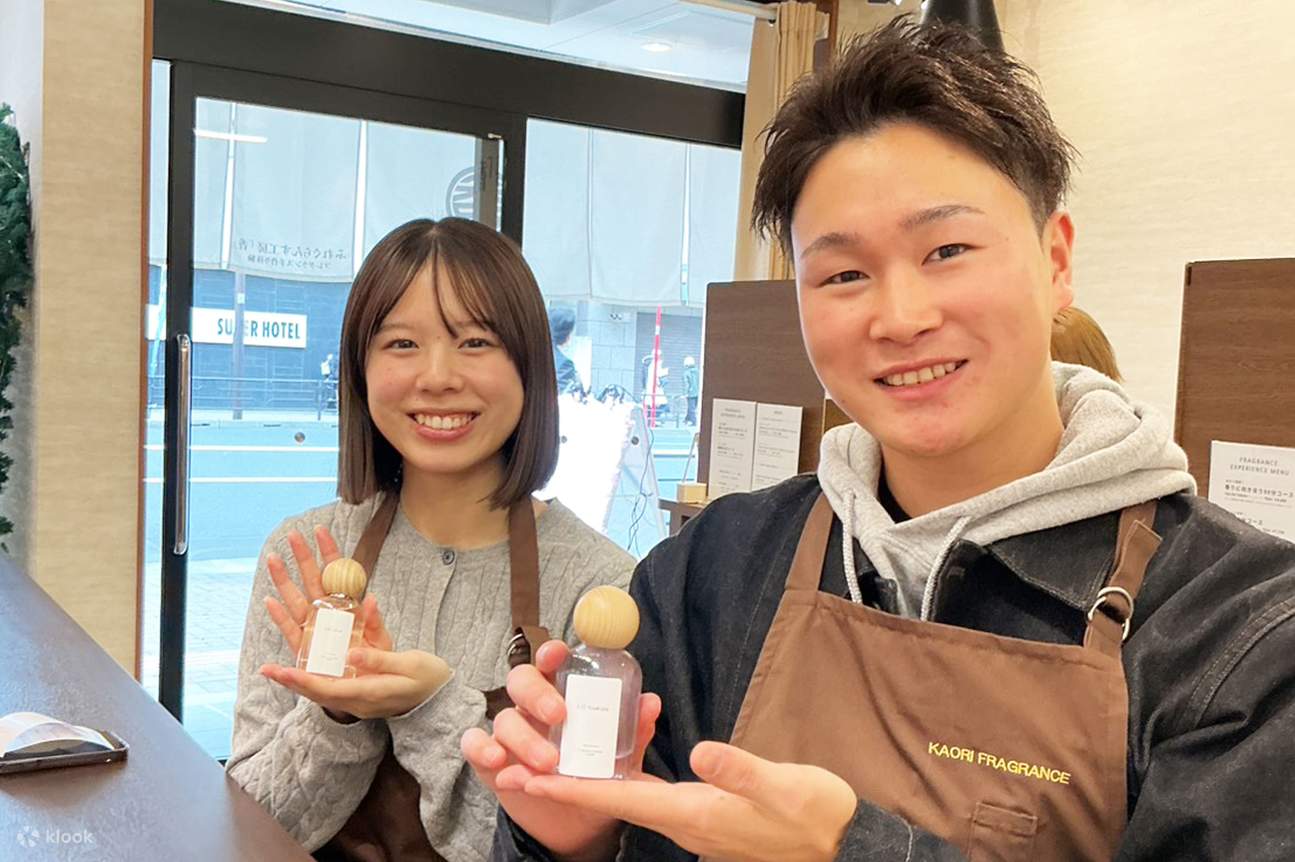
Fragrance has become a real scene in Japan: specialist scent shops keep opening in Tokyo, and international houses now release Japan-only perfumes. This workshop lets teens make their own. They choose from more than 50 fragrance notes, test-blend up to three times and leave with a 50 ml bottle, a certificate with their name and a pouch.
A good pick for a teen who’s more into fashion and beauty than anime — and it’s 2 minutes from Sensoji’s Nitenmon gate, so it’s easy to pair with a morning in Asakusa.
Prefer to buy something made in Japan rather than make it? Our guide to what to buy in Japan for teens covers the stickers, stationery, beauty and anime goods Japanese teenagers are actually buying.
Japanese Food Classes for Teens
Teen appetites make food classes an easy win. These two go further than the kids’ versions: one teaches ramen from scratch, the other starts at a working fish market.
7. Cook ramen and gyoza with a pro chef

Teens build a bowl of ramen and fold and pan-fry gyoza, then eat everything they made. It’s a little outside the center, which is part of the appeal — it feels like a local kitchen rather than a tourist set-up.
Ramen classes in this area are sold on all three booking sites. Compare the menu, length and age rule before you book; the byFood class is the only one with a stated minimum age.
Photo is from the Klook listing.
8. Tour Tsukiji market, then make sushi
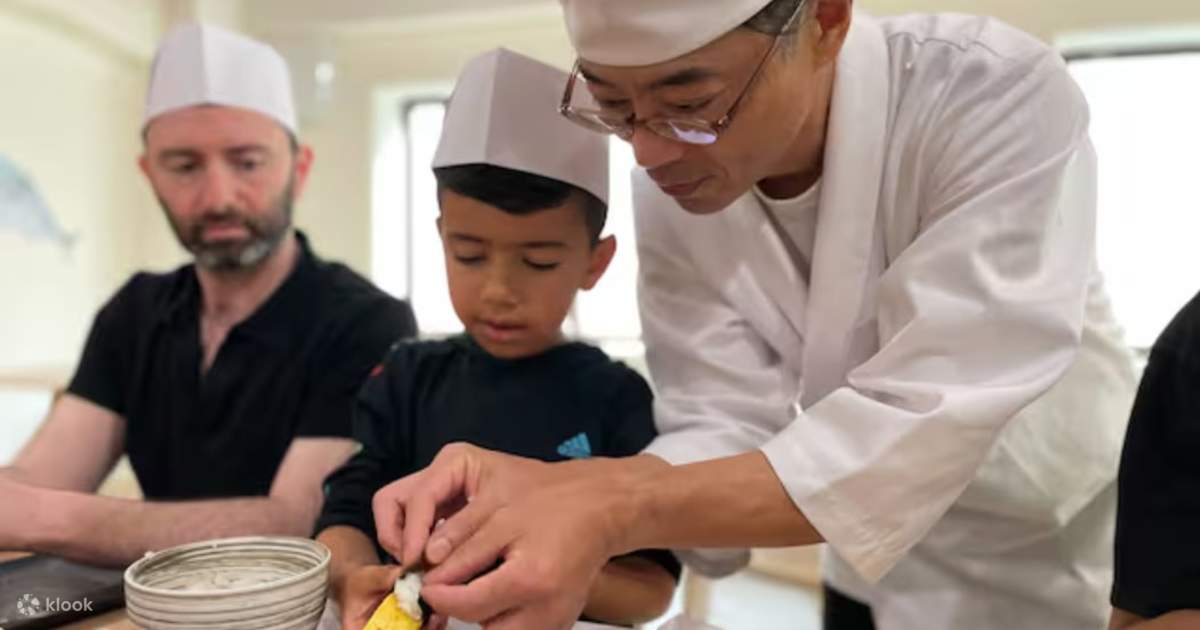
A guide walks you through Tsukiji Outer Market, with tastings along the way, then a chef teaches you to make your own sushi. It’s about a 4-hour commitment, so it works best as the main event of a morning.
Raw fish is part of the deal. If your teen isn’t sure, the byFood tour offers vegetarian, vegan, pescetarian and gluten-free options when you book.
Photo is from the same tour’s Klook listing.
Samurai, Sumo, Kendo & Taiko
More physical and more serious than the dress-up activities aimed at young children — real instructors, real technique and, in the sumo ring, a real opponent.
9. Take a ninja and samurai lesson
Teens get far more out of samurai and ninja experiences than younger kids, because there’s actual technique to learn rather than just costumes and photos. These two options suit different moods: a longer hands-on training lesson, or a shorter samurai experience with costumes and sword-drawing.
10. Practice kendo, Japanese fencing
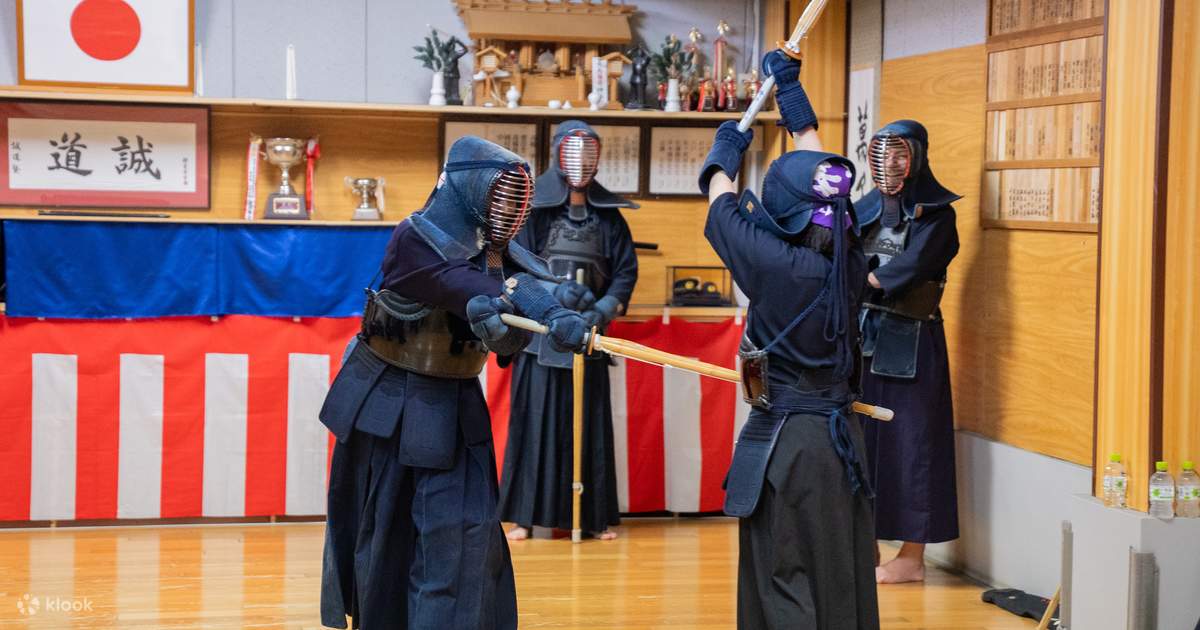
Kendo is a modern martial art built on samurai sword training, practiced with bamboo swords and armor. Beginners learn the stances, footwork and strikes, and usually get to try on the kendo uniform.
It’s a good fit for sporty teens who want something more authentic than a tourist show.
Photo is from the Klook listing, not the Viator class in Nihonbashi.
11. Watch sumo up close — and step into the ring
Outside the three Tokyo tournaments a year, this is the easiest way to see sumo up close. Former wrestlers demonstrate training drills and the pre-bout rituals, an English-speaking MC explains the rules and history, and the audience splits into East and West teams for three exhibition bouts.
Then eight volunteers — four from each side — put on padded suits and take on a wrestler. Spots are limited and drawn by lot if more people volunteer. All-you-can-eat chanko hot pot, inari sushi and karaage are served during the show, with one drink included.
12. Play taiko drums
Taiko is loud, physical and instantly satisfying. You learn basic stances and rhythms on drums of different sizes, then play a short piece together. It’s a good one for siblings or the whole family, and no musical background is needed.
Traditional Japan & Street Culture
Not everything needs a class. These three are about wandering, dressing up and taking photos, and they fit easily around a booked experience.
13. Walk Asakusa in a kimono
Renting a kimono and walking around Sensoji is one of the most popular things young visitors do in Tokyo. Staff dress you and can style your hair with accessories, then you have the day to explore and take photos.
Plans start from ¥2,880, with options for hair styling, makeup and men’s kimono. Next-day return is included, and the shop offers free luggage storage, umbrella rental and warm coats.
14. Make purikura photos and explore Harajuku
Takeshita Street packs street fashion, sweets and small shops into one narrow lane, along with purikura photo booths where friends decorate a printed strip of pictures. Give your teen a budget and an hour to explore — or book a small-group tour that does the planning for you.
Weekends and school holidays get very crowded, so a weekday morning is easiest.
15. Go vintage hunting in Shimokitazawa (free)
Shimokitazawa’s vintage stores, record shops and cafes have a more relaxed feel than Shibuya. Rather than chasing one specific shop, give it a couple of hours and let your teen wander.
Many shops open late morning or around midday, so don’t arrive too early.
Anime, Gaming & Tokyo Views
Japan’s pop culture is as much a part of the trip as its temples. Two of these are free; the other three are easy wins on a rainy day or a last evening.
16. Explore Akihabara’s anime and gaming stores
Floor after floor of games, figures, character goods and retro consoles. For a teen who already knows their favorite series, Akihabara can be the highlight of the whole trip.
Some shops, themed cafes and game center floors in Akihabara are for adults only. If you’d rather skip the maid cafe, look around on your own.
17. Visit Anime Tokyo Station (free)
A free anime facility run by the Tokyo government, a 4-minute walk from Ikebukuro Station. Changing exhibitions feature popular series, and the basement shows layouts, original drawings, scripts, storyboards and cels that are rarely on public display.
It’s in the same neighborhood as the manga and anime workshops, so it’s easy to pair with either.
18. Go big on indoor rides at Tokyo Joypolis
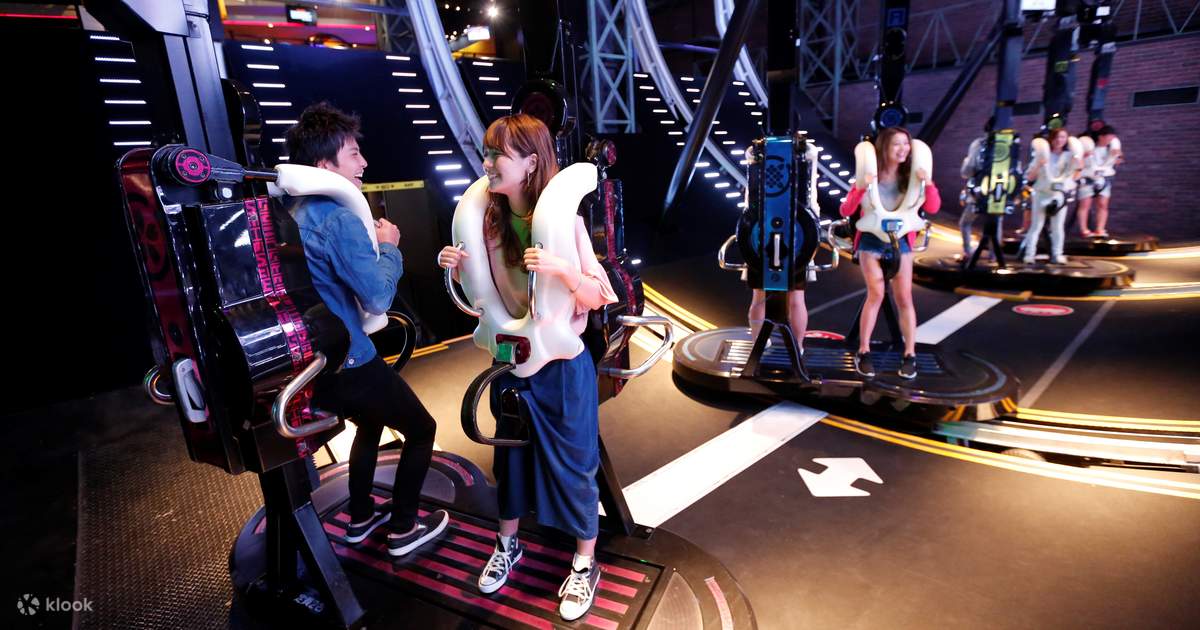
Run by SEGA, Joypolis fills three floors in Odaiba with VR attractions, simulators and arcade-style rides — Japanese game culture at full volume. It’s one of the easiest rainy-day picks in Tokyo, and the Passport covers the rides.
Good news for parents of teens: Joypolis counts everyone aged 7 to 17 as a child, so a teen Passport is ¥1,000 cheaper than an adult one. Klook often sells the Passport as a discounted e-ticket.
19. Step inside the art at teamLab Planets

Created by the Japanese art collective teamLab, this walk-through museum has you wading barefoot through water and moving through rooms of light and mirrors. It’s hugely photogenic, which is usually all the convincing teens need.
Junior high and high school students get their own ticket price. Book a time slot ahead, especially at weekends.
20. See Tokyo from SHIBUYA SKY
An open-air rooftop high above Shibuya Crossing. Tickets for each date go on sale about two weeks ahead, and sunset slots sell out first — sometimes within minutes — so book as soon as you know your dates if your teen wants that shot.
Teens pay the adult price from age 13. Entry before 15:00 is cheaper than the sunset and night slots.
How to choose for ages 13–17
- Anime and gaming fans: The manga lesson or anime workshop in Ikebukuro plus Anime Tokyo Station, then a day in Akihabara.
- Sporty or restless teens: Kendo, a ninja and samurai lesson or taiko in the morning, then Joypolis later.
- Creative, detail-focused teens: Edo Kiriko glass, kintsugi, pottery or perfume blending.
- Food lovers: The ramen and gyoza class (13+), the Tsukiji tour or the sumo show with chanko.
- Fashion and photo lovers: A kimono walk in Asakusa, Harajuku, Shimokitazawa, teamLab and SHIBUYA SKY.
Several of these sit close together. Edo Kiriko, perfume, the kimono walk and the sumo show are all in Asakusa, and pottery is one stop away in Asakusabashi. The manga lesson, anime workshop and Anime Tokyo Station are all in Ikebukuro. Edo Kiriko (from 9), the sumo show and the kimono walk also appear in our kids’ guide, so younger siblings can join in. For more that suit both age groups, see our guide to Japanese experiences for kids in Tokyo.
Family Compatibility
Practical Tips
- Let your teen pick one priority. One booked experience plus free time to explore usually beats three rushed bookings.
- Check what a teenager pays. It varies a lot: Joypolis counts 7–17 as children, teamLab has a junior high and high school price, the sumo show charges adult prices from 12 and SHIBUYA SKY from 13.
- Read the age rule on the exact package. Different sellers of a similar workshop can have different minimum ages.
- Think about what comes home. Kiriko glass, kintsugi, perfume and a manga page go home the same day; pottery takes up to a month and costs extra to ship.
- Set a shopping budget before Akihabara or Harajuku. It saves a lot of negotiating at the till.
- Check adult-only venues. Some Akihabara shops, themed cafes and game center floors are adults only, and minors may be restricted from game centers late in the evening.
- Get a Suica or PASMO for each teen. It lets them tap through stations and pay at convenience stores on their own.
FAQ
What is there for teenagers to do in Tokyo?
Hands-on Japanese experiences work best: a sumo show where volunteers can step into the ring, kendo or samurai lessons, Edo Kiriko glass cutting, kintsugi and manga drawing with a professional artist. Add free time in Akihabara, Harajuku or Shimokitazawa and one big view, such as SHIBUYA SKY.
Do teenagers pay adult prices in Tokyo?
Often, but not always. SHIBUYA SKY charges adult prices from 13 and the Asakusa Sumo Club from 12, while Joypolis counts everyone up to 17 as a child and teamLab Planets has a cheaper junior high and high school ticket.
Are these experiences in English?
Most of the booked experiences here have English instruction or interpretation, and the sumo show has an English-speaking MC. Each card above notes the level of English to expect; one kendo reviewer mentioned limited English from the instructor.
What can teens do in Tokyo on a rainy day?
Joypolis, teamLab Planets, Anime Tokyo Station and any of the indoor workshops — manga, anime, Edo Kiriko, kintsugi, pottery, perfume or a food class — work well in the rain. Our rainy day guide to Tokyo has more indoor ideas.
Which experiences let teens take something home the same day?
Edo Kiriko glass, kintsugi, a custom perfume and the manga page all go home the same day, and the anime workshop gives you a data file. Pottery has to be fired, so it takes up to a month and is usually shipped.
Looking for more Tokyo experiences?
Browse more workshops, food classes and tours in Tokyo — many offer free cancellation up to 24–48 hours before.
Planning the rest of your Tokyo trip?
Start with our Tokyo with kids hub for neighborhoods, transport and family basics — or see what Japanese teens are buying right now.